1. Gulf Coast Microclimate Dynamics & Severe Storm Exposure in Southeast Louisiana
Operating a roofing system in New Orleans, Jefferson Parish, and the surrounding Lake Pontchartrain delta requires engineering resilience against extreme atmospheric dynamics. The subtropical maritime climate generates prolonged humidity levels exceeding 85%, relentless solar ultraviolet radiation, and frequent tropical squall lines. These environmental stressors accelerate the thermal breakdown of asphalt binders, dry out elastomeric caulks, and oxidize roofing fasteners long before severe hurricane weather approaches.
When major cyclonic systems enter the northern Gulf of Mexico, these vulnerabilities are violently exposed. Storm winds generate extreme aerodynamic uplift forces along roof eaves, rakes, hips, and ridges. In historic New Orleans neighborhoods—including the French Quarter, Uptown, Mid-City, and the Garden District—as well as modern suburban subdivisions across Metairie and Kenner, high-velocity winds create low-pressure vortices along roof edges. Shingle sealant strips rupture under cyclic buffeting, allowing torrential wind-driven rain to penetrate beneath laps and saturate building envelopes.
Furthermore, tropical storms routinely dump between 5 and 10 inches of rain across New Orleans within a few hours. When low-slope commercial drains choke or when historic slate flashings loosen, water tracks horizontally along roof rafters and structural ceiling joists. RoofExpertUSA operates a dedicated 24/7 telephone triage desk at (888) 208-4155, dispatching verified independent roofing contractors to halt active moisture intrusion before catastrophic interior drywall, electrical, and structural framing decay occurs.
Localized Microclimate & Repair Protocols • Precision Sheet Metal Flashing & Masonry Abutments
- Severe Coastal Wind-Load Resistance: Deployment of ASTM D3161 Class F and ASTM D7158 Class H wind-resistant materials engineered to withstand hurricane-velocity gusts up to 130–150 mph.
- Corrosion-Resistant Marine Fasteners: Utilizing heavy-gauge solid copper clout nails, stainless-steel screws, or hot-dipped galvanized ring-shank fasteners that resist coastal moisture oxidation.
- Rapid Hydrostatic Pressure Relief: Controlled water deflection and ceiling puncture protocols that relieve trapped interior moisture pockets, preserving historic lath-and-plaster assemblies.
- Louisiana Building Code Compliance: All mitigation and permanent restoration procedures align strictly with the 2021 International Residential Code (IRC) High-Wind Coastal provisions and Louisiana State Licensing Board for Contractors standards.
2. Non-Destructive Moisture Diagnostics & FLIR Thermal Tracing
Accurately diagnosing the origin of storm-related roof leaks requires advanced forensic instrumentation rather than guesswork. Because water tracks unpredictably along structural rafters, tongue-and-groove decking, and plumbing conduits, visual examination of interior ceiling spots frequently points to locations far removed from the actual exterior breach point.
Dispatched independent technicians employ calibrated FLIR® infrared thermal imaging cameras capable of detecting minute surface temperature differentials down to 0.05°C. Evaporating water draws latent heat from saturated building assemblies, appearing as distinct cool-temperature thermal anomalies on infrared displays. Technicians trace moisture pathways from interior drywall stains through attic blown fiberglass insulation and up to specific exterior roof entry points, such as cracked pipe collars, uplifted step flashings, or fractured shingle keys.
To corroborate thermal readings without damaging roofing membranes, technicians utilize non-destructive Tramex® dielectric moisture meters. These instruments emit harmless electrical impedance signals into substrate layers up to four inches deep, quantifying hidden moisture saturation percentages within plywood decking and rigid insulation boards. Dispatched specialists compile these electronic readings into comprehensive photographic forensic dossiers, providing property owners with undeniable evidentiary support for homeowners insurance adjusters.
3. Step-by-Step Substrate Restoration & Dry-In Methodology
Restoring a storm-compromised roofing system requires rigorous mechanical dry-in and substrate stabilization protocols. Dispatched independent contractors adhere to a disciplined multi-stage execution framework:
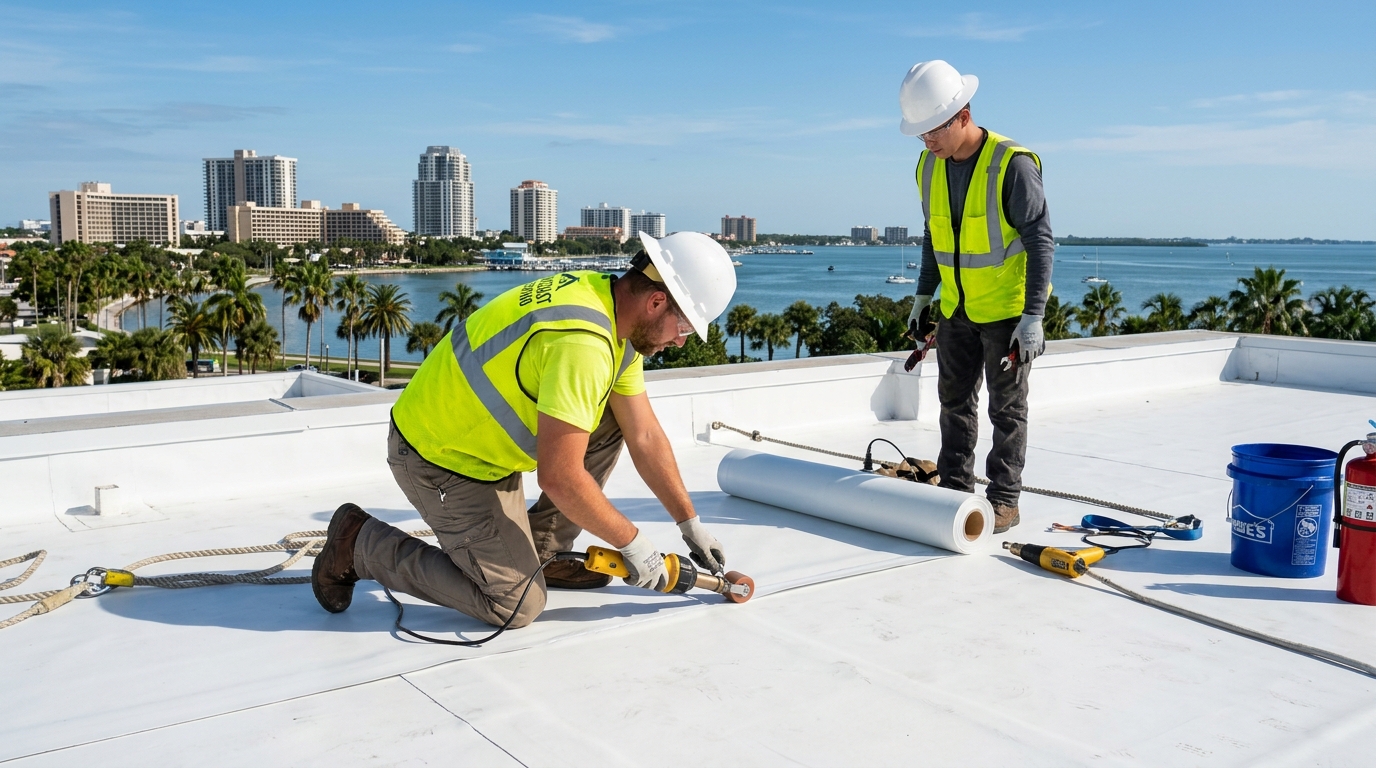
- Perimeter Safety & Structural Stabilization: Responding crews establish OSHA-compliant fall-arrest boundaries and ground safety exclusion zones. If fallen tree limbs or heavy storm debris rest on roof trusses, technicians evaluate structural rafter deflection before mounting the slope.
- Debris Extraction & Substrate Exposure: Damaged shingles, fractured tiles, and saturated felt underlayment are systematically removed to expose the underlying wooden sheathing. Technicians inspect decking for rot, fungal decay, delamination, and fastener pull-out fatigue.
- Decking Reinforcement & Marine Fastening: Spongy or rotted plywood sections are cut back to framing centers and replaced with exterior-grade CDX plywood. Decking is re-secured using 8d ring-shank nails spaced at 6 inches on center along panel edges to meet coastal high-wind uplift codes.
- High-Temperature Peel-and-Stick Barrier Installation: Technicians apply a premium self-adhering modified bitumen ice-and-water underlayment directly to the bare wood deck. This rubberized asphalt membrane forms a monolithic, waterproof seal around every subsequent nail penetration.
- Precision Mechanical Weatherproofing: New architectural shingles or metal flashing assemblies are installed using a six-nail hurricane fastening pattern with hand-applied asphalt sealant dots beneath exposed tabs, ensuring superior wind uplift resistance.
4. Louisiana State Energy Codes & Contractor Licensing Compliance
Adhering to state and municipal building codes is essential to safeguarding property value and ensuring insurance coverage validity following storm damage. In Louisiana, roofing work is regulated by statutory standards designed to protect consumers from unlicensed transient storm chasers. Under Louisiana Revised Statutes Title 37, residential roofing projects exceeding ,500 require contractors to be licensed through the Louisiana State Licensing Board for Contractors (LSLBC) under Home Improvement or Residential Building classifications.
Commercial low-slope and steep-slope projects exceeding ,000 are regulated under Commercial Contractor licenses with a specialized Roofing subclassification. Dispatched independent roofing contractors maintain appropriate state licensure, general liability coverage, and statutory workers' compensation insurance. Furthermore, repairs executed in Orleans and Jefferson Parishes must comply with the 2021 International Residential Code (IRC) High-Wind Coastal amendments, which mandate specific fastener pull-out resistance, enhanced drip-edge fastening, and closed-valley metal flashing gauges.
Energy efficiency is also an integral component of code compliance. Dispatched contractors ensure proper balanced attic ventilation—maintaining the 1:300 net free ventilating area ratio between soffit intake vents and ridge exhaust baffles. In New Orleans' intense subtropical heat, proper ventilation prevents superheated attic air from baking shingles from below, extending roof lifespan and reducing household cooling electrical demands.
5. Preventative Property Maintenance & Hurricane Preparedness
While emergency triage addresses acute storm damage, proactive maintenance significantly mitigates catastrophic roof failures during future tropical weather events. Coastal Louisiana homeowners should implement a disciplined seasonal inspection schedule:
- Semi-Annual Fastener & Flashing Audits: Inspect perimeter edge metal, chimney crickets, and dormer step flashings every spring and autumn. Check for telltale rust staining, loosened fasteners, or cracked polyurethane caulking seams.
- Tree Canopy Management: Prune large live oak, pecan, and cypress branches back at least 10 feet from roof eaves. Overhanging limbs scrape mineral granules from shingles during high winds and present severe puncture hazards during tropical storms.
- Continuous Gutter & Scupper Clearance: Clear leaves, moss, and storm debris from gutters to prevent standing water from backing up beneath drip edges and rotting sub-fascia framing.
- Attic Moisture & Daylight Checks: Periodically enter the attic on sunny days to inspect for visible daylight around pipe boots and chimneys, and examine structural rafters for dark water rings or mildew blooms following heavy rains.
- Immediate Emergency Dispatch Activation: If unexpected storm damage or active water leaks occur, dial (888) 208-4155 immediately. Our triage desk coordinates prompt emergency tarping and mitigation with qualified independent contractors.
Frequently Asked Questions • Flashing & Chimney Repair
When you call (888) 208-4155, our dispatch team records your emergency details immediately. During widespread storm events, tickets are prioritized based on structural hazard severity, with independent crews mobilized as rapidly as local travel conditions and weather safety permit.
Yes. Homeowners insurance policies typically require policyholders to mitigate further loss by tarping or sealing active roof leaks under standard "Duties After Loss" clauses. These reasonable emergency mitigation costs are reimbursable under covered property claims. Dispatched contractors provide itemized receipts and photo documentation.
During lightning, severe downpours, or extreme gale-force winds, ascending a roof presents severe life-safety risks. Responding technicians initiate immediate interior water containment and stage exterior tarping rigging to deploy the moment squall intensity diminishes to safe working levels.
Absolute Zero Web-Form Policy
RoofExpertUSA does not use web forms, email queues, or callback requests. For immediate emergency dispatch assistance across New Orleans and Jefferson Parish, call (888) 208-4155 directly.